 Adventure Tours
This Haitian Creole speaking travelers safari guide answers a question many repeat visitors ask. Can you go beyond the lodge deck and sleep under canvas in Kenya? The answer is yes.
You have seen the Masai Mara from a lodge deck before, watched the sunset with a drink in hand, and loved it. But now you want something different.
You want canvas in Laikipia, lions heard from a fly-camp in Meru, and the Chyulu Hills with almost no other tourists around.
Planning a Haitian Creole Speaking Travelers Safari
This guide covers visas, flights, costs, and camps in plain language, with honest details for travelers who want a real safari.
Do Haitian Citizens Need a Visa to Visit Kenya?
Yes. Haitian passport holders need a travel document to enter Kenya.
Since January 2024, Kenya has used an electronic travel authorization, or eTA, replacing the older eVisa system. You apply online before you fly. It is not a visa stamp in your passport, but a digital approval linked to your passport number.
The eTA costs about USD 34 and requires a valid passport, a return ticket, and proof of accommodation. Apply through the official Kenya eTA website at least two weeks ahead.
Haitian travelers sometimes face extra document checks. Officers may ask for proof of funds or onward travel, so carry printed copies of everything.
Is a Kenya eTA Enough for Haitian Passport Holders?
The eTA is the main requirement, but be ready for extra questions at the airport. Some Haitian nationals report that border officers want to see hotel bookings and a clear itinerary. BestCamp Safaris provides a full day-by-day itinerary for every booking.
Also carry a copy of your return flight ticket. Kenya asks for a yellow fever certificate only from travelers arriving from a country with yellow fever risk, per World Health Organization guidance. Haiti is not on that list, but confirm current requirements before you fly.
Flights from Port-au-Prince to Kenya: Routing and Travel Time
There are no direct flights from Port-au-Prince to Nairobi. You will connect through the United States or Europe.
Common routes include Port-au-Prince to New York, then a nonstop Kenya Airways flight to Nairobi. Another option is Port-au-Prince to Paris, then on to Nairobi on Air France or Kenya Airways.
Total travel time runs 20 to 26 hours, including layovers. The JFK to Nairobi nonstop leg alone takes 14 to 15 hours. Add another day for jet lag before your safari starts.
You will land at Jomo Kenyatta International Airport in Nairobi, where your safari operator meets you and drives you to your first night hotel.
Will Kenyan Safari Guides Understand Haitian Creole?
Haitian Creole is a French-based Creole. Most Kenyan guides do not speak Creole, but many speak French, since it is taught in Kenyan schools alongside English and Swahili. Haitian Creole shares a large vocabulary with French, so you can make yourself understood if you slow down and mix in French words.
BestCamp Safaris can pair you with a French-speaking guide who will understand almost all of your Creole. A true Creole-speaking guide is rare, but the French-Creole bridge works well on game drives and at camp.
Haiti and Kenya: A Real and Current Connection
Haiti and Kenya are connected right now, not just through history. In 2023, Kenya agreed to lead a multinational police support mission to Haiti, deploying officers to fight gang violence in Port-au-Prince. That deployment has been controversial and remains a sensitive topic for many Haitians. Kenya itself is a stable, visitor-friendly democracy with a growing tech hub in Nairobi.
Health Requirements and Vaccinations for Haitian Travelers
Yellow fever vaccination is a smart precaution for African travel, though Kenya does not currently require it for direct arrivals from Haiti. Carry proof if you have it, and check current rules before you fly.
Malaria is present in most safari areas, so ask your doctor about antimalarial tablets. Other recommended vaccines include hepatitis A, typhoid, and tetanus. Bring enough daily medication for the whole trip plus a copy of your prescription, since remote pharmacies are limited.
Currency, Costs, and M-Pesa for Haitian Visitors
Kenya uses the Kenyan shilling, abbreviated KES, but safari prices are often quoted in US dollars. Carry cash for park fees and tips, and small bills like USD 20s and USD 10s are useful.
M-Pesa is Kenya’s mobile money system, used at many lodges and shops. Set it up with your passport at a Safaricom shop in Nairobi in about 15 minutes.
Credit cards work at most city hotels and upscale lodges, but remote camps prefer cash or M-Pesa. Carry about USD 200 per person in cash for small expenses.
Food on Safari: Familiar Flavors and Vegetarian Options
Safari food is hearty and international. Most camps serve rice, beans, grilled meat, fresh vegetables, and tropical fruit. Kenyan beans are similar to Haitian beans, and mbaazi, a coastal dish of pigeon peas simmered in coconut sauce, has flavors that feel familiar to Haitian cooking.
Vegetarians eat well on safari. Tell BestCamp Safaris about your diet when you book. Breakfast is often served in the open savanna, and dinner is a three-course meal under the stars or in a mess tent.
Best Time to Visit for the Wildebeest Migration
The wildebeest migration is the big draw, but the best time depends on what you want to see.
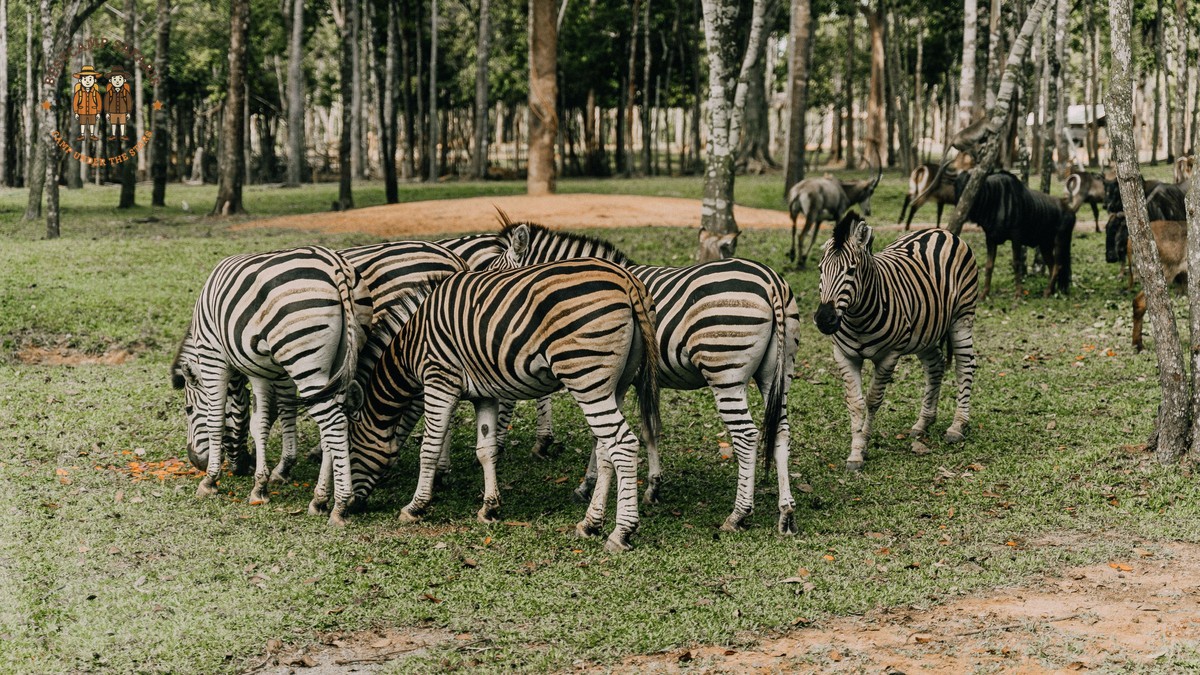
From July to October, the herds are in the Masai Mara. This is peak season, and the Mara entrance fee is USD 200 per adult per day from July to December.
From January to June, the herds are in Tanzania’s Serengeti. The Mara is quieter, with fewer wildebeest but more predators and fewer crowds, and entrance fees drop to USD 100 per adult per day.
For a repeat visitor, the low season is a gift: the Mara almost to yourself, and camp rates down 30 to 40 percent.
Ideal Safari Trip Length from Haiti
A short safari feels rushed after traveling this far.
Plan for at least 10 to 12 days: 8 to 9 full days on safari, plus 2 for travel and jet lag.
A good itinerary looks like this:
- Day 1: Arrive Nairobi. Overnight at a city hotel.
- Day 2: Fly to Masai Mara. Afternoon game drive.
- Days 3 to 4: Full days in the Mara.
- Day 5: Fly to Laikipia. Afternoon game drive.
- Days 6 to 7: Laikipia. Walk with camels, visit a rhino sanctuary.
- Day 8: Drive to Samburu. Game drive along the Ewaso Ng’iro River.
- Day 9: Samburu full day. Look for Grevy’s zebra and reticulated giraffe.
- Day 10: Fly back to Nairobi. Evening at a restaurant.
- Day 11: Depart.
Safety Considerations for Haitian and Caribbean Travelers
You may have seen travel advisories about Haiti. Kenya is different, and it is safe for tourists who follow standard rules.
Stay in organized camps, avoid walking alone at night, keep valuables secure, and listen to your guide.
Nairobi has a reputation for traffic and pickpocketing, so use hotel taxis at night and leave your passport in the hotel safe. In the parks, wildlife is the only real danger.
What to Pack: From Haiti’s Climate to Safari Kenya
Kenya’s high-altitude climate is cooler than expected. Daytime temperatures in the Mara run 25 to 28 degrees Celsius, and nights drop to 12 to 15 degrees.
Pack layers: a light fleece for dawn drives, a warm jacket for evening, long pants, and shorts for midday. Good walking shoes matter, and carry a sun hat, sunscreen, and insect repellent.
Avoid dark blue or black clothes, since they attract tsetse flies. Wear neutral colors like khaki, olive, or beige instead.
Featured Camps and Conservancies
Here are real places to sleep and explore.
| Place | Location | What you get | Fee range per night |
|---|---|---|---|
| Sasaab Camp | Westgate, Samburu | Tents with private plunge pools, views of the Ewaso Ng’iro River | USD 650 to USD 950 per person |
| Kicheche Laikipia | Ol Pejeta Conservancy | Grassland tents, morning walks, night game drives | USD 700 to USD 1,050 per person |
| Elsa’s Kopje | Meru National Park | Stone cottages on Mughwango Hill, no fences, elephants nearby | USD 500 to USD 800 per person |
| Campi ya Kanzi | Chyulu Hills | Tented suites, Maasai guides, walk to the Chyulu Hills | USD 600 to USD 900 per person |
| Naboisho Camp | Naboisho Conservancy | 4 luxury tents, shared conservancy, off-road driving allowed | USD 850 to USD 1,200 per person |
Conservancy fees are bundled into the nightly rates above. Park fees are separate and change with season.
Compare that with public parks and reserves:
| Park | Fee per adult per day | Best time to visit |
|---|---|---|
| Masai Mara (county reserve) | USD 100 (Jan to Jun), USD 200 (Jul to Dec) | July to October for migration |
| Amboseli National Park | USD 90 per day | June to October for Kilimanjaro views |
| Lake Nakuru National Park | USD 90 per day | Year round. Rhinos and flamingos |
| Meru National Park | USD 70 per day | January to March for solitude |
| Chyulu Hills National Park | USD 40 per day | Year round. Walking country |
Off-peak travel saves real money, and camp rates drop too.
The BestCamp Safaris Difference
BestCamp Safaris does not sell the same itinerary to everyone. We build trips around your pace and your history.
You know the lodge drill already. We offer fly-camps with simple canvas tents, campfire dinners, and the sound of hyenas at night. We book small camps with 6 to 10 tents, not big 40-tent lodges.
Our guides are trained in French to bridge the Creole gap, and they know the private conservancies where vehicles are limited.
We also handle the logistics: your eTA, internal flights, and a full itinerary for immigration. You show up with your passport and travel documents.
See our guide for Jamaican Patois-speaking travelers for similar advice, or explore a Rwanda gorilla trekking extension and the sundowner drinks tradition on safari.
Final Pre-Trip Checklist
- Apply for your Kenya eTA at least 2 weeks before.
- Check whether a yellow fever certificate applies to your route, and carry proof if it does.
- Book your flights from Port-au-Prince with a connection in New York or Paris.
- Pack layers. Mornings and nights are cold.
- Bring USD 200 in small bills for tips and extras.
- Set up M-Pesa in Nairobi if you want mobile payments.
- Print your itinerary, hotel confirmations, and return ticket.
- Tell your guide you speak Haitian Creole. They will adjust their French.
Plan Your Kenya Safari with BestCamp
You are ready for a deeper safari, with canvas walls, star beds, and the quiet of a private conservancy.
Kenya is open, the parks are ready, and the off-peak rates are a gift.
Start a conversation with BestCamp Safaris today. We will build a trip around your dates, your budget, and your language. We handle the planning, the bookings, and the paperwork. You just pack.
Contact BestCamp Safaris to plan your trip.
More safari planning resources
- Kenya national parks map from SafariPure
- Masai Mara Great Migration guide from Trunktrails Safaris
- Kenya tour packages from Valley Safaris
- Kenya eTA and eVisa guide on Touring Insights
Related guides: Kenya Safari for Belarusian Speakers: 2026 Guide.


